Exploring Patchwork Sashiko & Slow Sewing with Diana Li
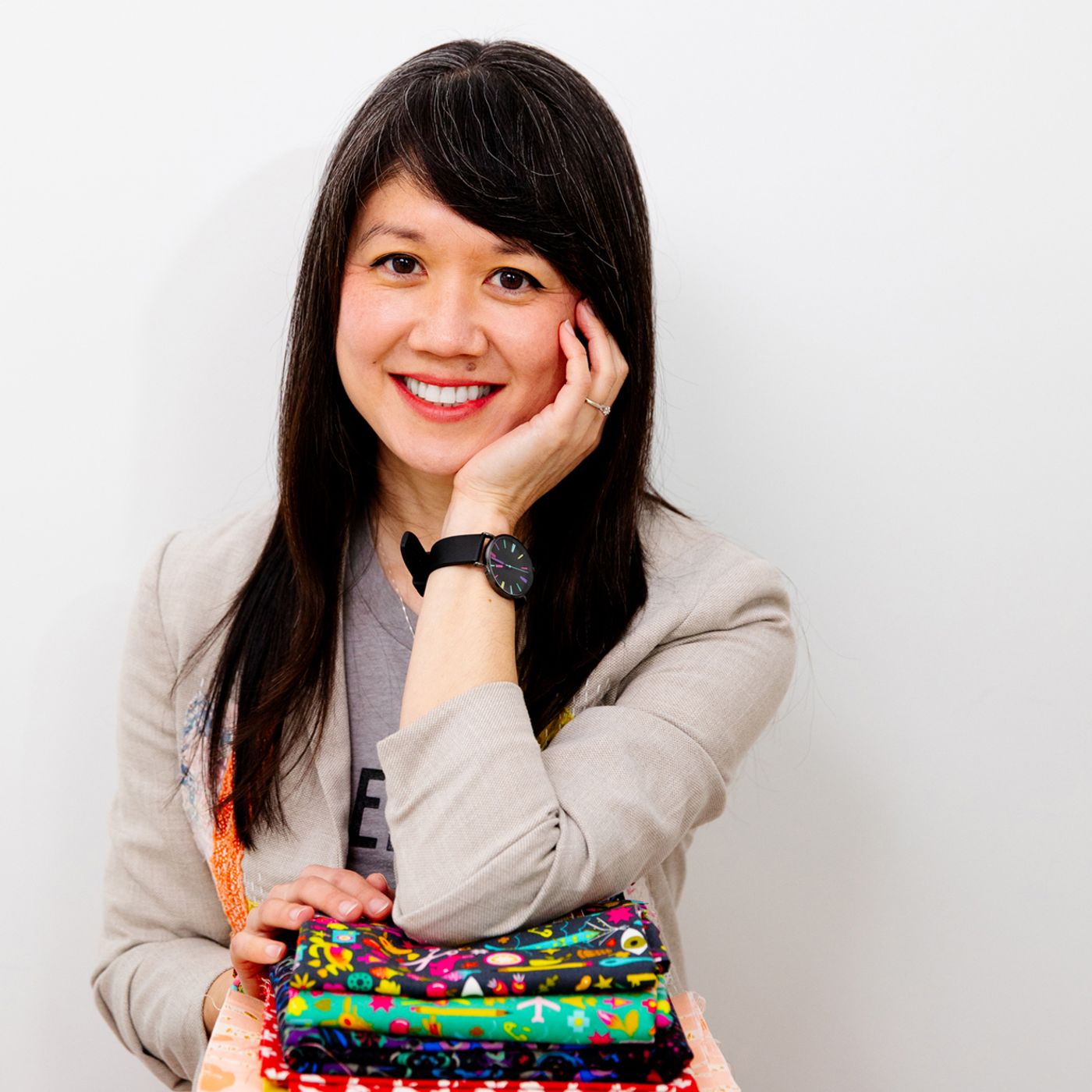
Designer, teacher, and creator of the Patchwork Sashiko Method, Diana Li brings a thoughtful, improvisational approach to sewing that blends tradition, sustainability, and personal expression. She taught several classes at the 2026 Fiber+Fabric Craft Festival that introduced participants to this technique. We sat down with Diana to talk about her creative beginnings, her teaching philosophy, and what inspires her in the world of craft today.
When did you start sewing and crafting? What were your first experiences with crafting?
I can recall “making things” as a very small girl and through school I was one of the quiet artistic (and a bit nerdy) kids of my class. Drawing and creating was a big part of our home growing up. My mom used to make our clothing when we were young, but I don’t think I tried using a sewing machine until middle school when it was taught in my home economics class. I honestly wasn’t very interested! Probably because I was being told what to make. I still have the large drawstring bag I made with 4 pockets on the outside!
What inspired you to start teaching sewing and sashiko methods to others?
Even in my previous career, I loved to teach others, help them learn something new and feel accomplished. It felt natural to me to transition from sewing pieces to sell, to designing sewing patterns and sharing what I know through teaching.
My Patchwork Sashiko Method started out as my own pet project. I was fascinated by the look of these very old and storied hand-stitching and fabric re-purposing traditions. I wanted to figure out a way for me to create a stable yet haphazard-looking, raw edged textile from my abundant scraps that I could use in my own projects. When I realized that others were interested in what I was doing, I decided to mold it into something I could teach. The feeling I get from small (and large!) moments of seeing someone feel like they’ve created something beautiful is immeasurable and keeps me motivated.
How do you approach a new design or project? Where do you find inspiration, and how do you translate that into a design?
A new design or project always starts out with a sketch, usually a lot of sketches. From there I apply measurements and make a prototype. I’m so excited during this stage that the prototypes are put together very fast! I don’t care about thread color, fabric choice or even if the sewn lines are attractive. I know it will take a few tries before I’m satisfied and I’m impatient to see what the final piece will look like.
I try to stay open to inspiration everywhere. That means I’m always looking and observing. If something catches my eye, I try to figure out why and make note of it. If it’s color or pattern I try to incorporate it into my future projects. If it’s design or structural pieces, I think about what kind of project could benefit from it. Think about the scale, how it could be modified to become practical.
You taught Patchwork Sashiko Clothing Embellishment and Patchwork Sashiko Method at Fiber+Fabric Craft Festival. What was that experience like? What did you want crafters to take from those classes? Did you learn anything new from the experience?
My experience teaching at Fiber+Fabric Craft Festival was wonderful. The people behind the scenes assisting the teachers were very helpful and friendly. And of course the attendees were a joy! I love to see how people from different walks of life find sewing as a common ground for friendship.
I hope the attendees went away from my classes with a renewed sense of possibility. For some of them, the idea of re-purposing scraps in this manner was completely new. Anytime someone walks away from my class feeling like they were challenged and accomplished something that they haven’t done before is a success for me.
Your classes at Fiber+Fabric Craft Festival, along with your social content, feel grounded in slow sewing, visible mending, and creative reuse. What advice do you have for other crafters who are starting to think of ways to engage with the slow sewing and visible mending movements?
I recommend starting with what is comfortable and practical to you. Maybe you often have clothes that get a little hole and would be perfect for mending with a colorful scrap of fabric. It’s a small way of getting into a re-purposing habit. Regarding slow-stitching, I am a strong advocate for stitching however is comfortable for you. There’s a lot of different hand-stitching methods out there including my own. But, you are more likely to stick with it if it’s a comfortable method for you. Or maybe come up with your own method! Don’t let anyone convince you you’re doing it wrong :)
You make a lot of beautiful patchwork pieces that utilize dozens of fabric scraps. How do you approach arranging colors, shapes, and materials? Do you have any advice for others interested in organizing their fabric stash for patchwork pieces?
Oh goodness, I have to really think about this one! When I create a new color palette for my Patchwork Sashiko Kits, I usually start with one fabric with a color/pattern I like. Then, as I audition other fabrics with it, I can often instantly know if it looks “right” with it. And I’ve noticed that this usually has less to do with the color family and more to do with the temperature of the color. If the temperatures don’t match, it usually rubs me the wrong way!
As far as organizing my fabric stash, all my larger pieces (not scraps) are organized by color. But, my fabric scraps are not organized at all! I may place specific designers together, but everything else is a hodge-podge. And this is the great thing about my Patchwork Sashiko Method. Don’t worry about the fabrics you select for the patchwork. Just stick your hand in the scrap bin and pull out a handful. The uniform hand-stitching on top of the patchwork will be a unifying element that makes the entire textile appear very cohesive. The patchwork in the background will become an amalgam of colors and patterns like an impressionist painting.
What would you tell crafting teachers interested in teaching at next year’s Fiber+Fabric Craft Festival?
I would tell them that it’s a unique chance to reach a wide spectrum of different types of crafters, not just sewists. The classes and the vendor hall are full of a variety of crafting mediums and it’s lovely having such a mix of perspectives.
The Fiber+Fabric Craft Festival, presented by Synchrony, invites teachers, speakers and demonstrators to be part of the 2027 lineup. If you have expertise to share or a passion for teaching, we want to hear your idea. Click here to answer our call for speakers!